
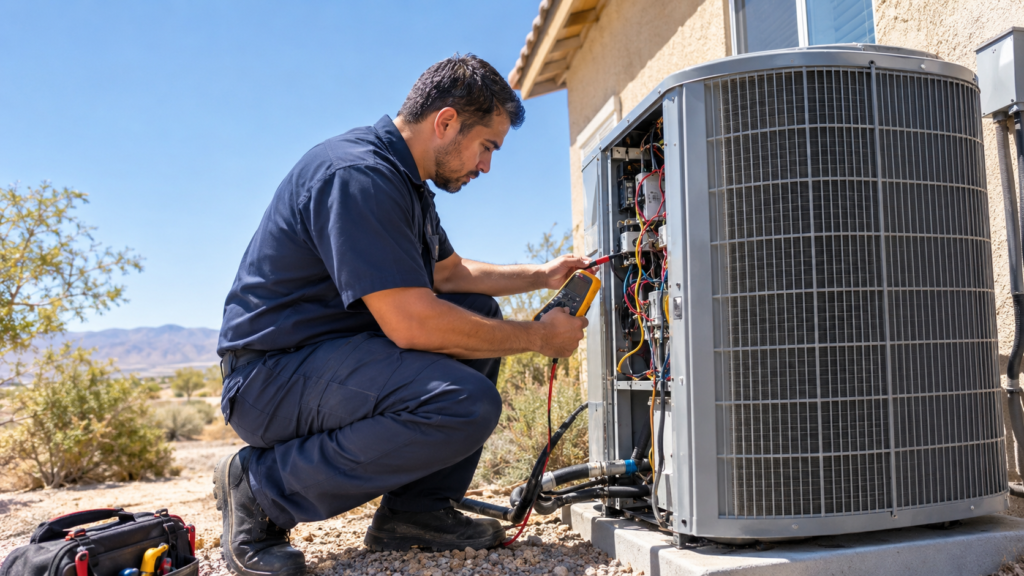
In Palmdale, your air conditioner isn’t a convenience – it’s what keeps your home livable through summers that regularly push past 100°F. A yearly AC tune-up is one of the simplest things a homeowner can do to avoid a breakdown on the hottest day of the year, and it’s often overlooked until something goes wrong.
What Happens During an AC Tune-Up
A proper tune-up isn’t just a quick glance at your unit. Our technicians typically check:
- Refrigerant levels – low refrigerant makes your system work harder and cool less effectively
- Electrical connections and components – loose or worn connections are a common cause of sudden failures
- The condenser and evaporator coils – dirty coils reduce efficiency and strain the compressor
- Air filters – a clogged filter restricts airflow and forces the system to work harder
- Thermostat calibration – makes sure your thermostat is reading and responding correctly
- The condensate drain line – a clogged line can lead to water damage or system shutdowns; see our drain line guide for more on this
- Overall airflow and system performance
Why Tune-Ups Matter More in Palmdale
Desert conditions are tough on HVAC equipment. Dust and sand accumulate in coils and filters faster here than in milder climates, and units run longer hours during peak summer months. That extra strain shortens the lifespan of components that wouldn’t wear out as quickly elsewhere. A tune-up catches early signs of that wear before they turn into a mid-July breakdown.
How Often Do You Need One?
Most homeowners benefit from one tune-up per year, ideally in spring before peak cooling season starts. If your system is older or you’ve noticed reduced performance, a check before summer and again before winter (if you run a heat pump) can help catch issues earlier.
Signs Your AC Needs a Tune-Up Now
- Weaker airflow than usual
- The system running longer to reach the same temperature
- Higher energy bills without a clear cause
- Unusual noises when the unit starts or runs
- Uneven cooling between rooms
If you’re noticing any of these, it may be worth a full AC repair inspection rather than a standard tune-up.
Tune-Up vs. Repair vs. Replacement
A tune-up is preventive maintenance – it won’t fix a failing component, but it often catches problems early enough that a small repair is all that’s needed instead of a larger one. If your system is already showing serious issues, our team can tell you honestly whether a repair or a full AC installation makes more sense for your situation.
Frequently Asked Questions
How long does an AC tune-up take?
Most tune-ups take about an hour, depending on the system and whether any issues are found during the inspection.
Can a tune-up lower my energy bill?
A well-maintained system runs more efficiently, which can help reduce energy use, especially if your filters or coils were dirty beforehand.
What’s the difference between a tune-up and a full inspection?
A tune-up covers standard maintenance items. If we find a specific problem during the visit, we’ll explain it and let you know if further diagnosis or repair is needed before doing any additional work.
Is a tune-up worth it if my AC seems fine?
Yes – many issues develop gradually and aren’t noticeable until the system fails. A tune-up catches wear before it becomes a breakdown.
Schedule Your AC Tune-Up in Palmdale
A yearly tune-up is one of the easiest ways to avoid a summer AC emergency. Call (661) 543-3885 to schedule your AC tune-up with Desert Cool HVAC.
Leave a Reply