
A Palmdale summer isn’t forgiving to an aging or undersized AC system. When a unit can’t keep up with triple-digit heat anymore – running constantly, cooling unevenly, or breaking down every few months – replacement usually ends up cheaper than another season of repairs. We handle installations for homeowners across Anaverde, Lakeview, and the wider Antelope Valley who’ve reached that point.
Signs It’s Time for a New System
Not every AC problem means you need a full replacement, but certain signs point that way. A unit over 12-15 years old that needs a major component repair is often past the point where fixing it makes financial sense – you end up paying repair costs on a system that’s still going to fail again soon. Rising energy bills despite normal usage, frequent breakdowns, uneven cooling between rooms, or a system that just can’t keep the house below 80° on hot days are all signals worth a second look. If you’re not sure which category you’re in, our air conditioner repair page covers common repair scenarios, and a technician can tell you honestly whether repair or replacement makes more sense for your situation.
What’s Included in Our Installation Process
Site evaluation. Before recommending any unit, we look at your home’s square footage, ceiling height, window exposure, ductwork condition, insulation, and electrical setup. The right AC size depends on all of these factors together – not square footage alone, which is where a lot of installations go wrong and homeowners end up with a system that’s either too big or too small for the house.
Unit selection. We install central air conditioners, ductless mini-split systems, and heat pumps from major manufacturers, matched to your home’s actual cooling load and California’s efficiency requirements. Each system type suits different situations – central air works well for homes with existing ductwork, mini-splits are a strong option for room additions or homes without ducts, and heat pumps can handle both heating and cooling in one system, which is worth considering if your furnace is also getting old.
An oversized unit cycles on and off too often, which wastes energy and wears out components faster without actually improving comfort. An undersized one runs constantly without ever fully cooling the house on the hottest days. Getting this calculation right is the single biggest factor in how well a new system performs – see our system sizing consultation for how we work this out for your home specifically.
Professional installation. Our technicians handle mounting, refrigerant line connections, and electrical work to code, including dedicated circuits where required. Every install is pressure-tested for refrigerant leaks before we consider the job done – this step gets skipped in rushed installations and is one of the most common causes of a new system underperforming within its first year.
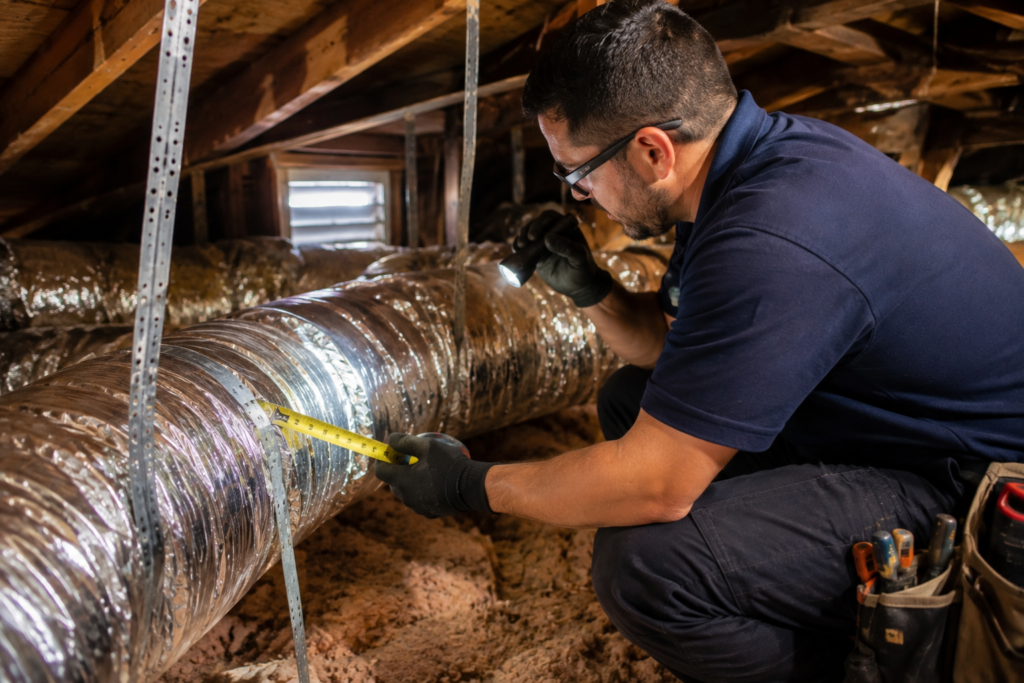
Ductwork evaluation. An installation is only as good as the ducts delivering that cool air. Leaky, undersized, or poorly sealed ductwork can undercut even a high-efficiency unit’s performance, sending cool air into your attic instead of your living room. If your ductwork needs attention as part of the install, see ductwork cleaning for what that process involves.
Electrical and safety compliance. New installations often require electrical upgrades – dedicated circuits, proper breaker sizing, and surge protection – to meet current code and protect the new equipment. We handle this as part of the installation rather than treating it as a separate afterthought.
Thermostat setup. Most new systems pair well with a smart or programmable thermostat for better control and lower energy use, especially useful in a climate where temperatures can swing 30-40 degrees between day and night. We handle this as part of installation – details on our smart thermostat integration page.
Testing and walkthrough. After installation, we test airflow at every vent, temperature consistency across rooms, and system noise levels before walking you through how your new system and thermostat work, so you’re not guessing at settings after we leave.
Timing Your Installation
Installing before peak summer, ideally spring, means shorter scheduling wait times and gives you a working system before temperatures spike. Waiting until an old unit fails completely in July often means both a more urgent repair-or-replace decision and higher demand across every HVAC company in the Antelope Valley. If your current system is already showing signs of trouble, it’s worth getting a quote before it fails outright rather than after.
Why Proper Installation Matters More Than the Unit Itself
Two identical AC units can perform completely differently depending on how they’re installed. Incorrect sizing, an improper refrigerant charge, or leaky ductwork can undercut even a high-efficiency system’s performance – you end up paying premium prices for a unit that runs like a budget one. This is also why a rushed or DIY installation often causes more problems than it solves: refrigerant handling and electrical work here aren’t places to cut corners, and mistakes made during installation are expensive to correct later.
After Installation: What Keeps a New System Running Well
A new AC system is a meaningful investment, and how it’s maintained afterward affects how long it lasts. Regular filter changes – every 1-3 months depending on usage and dust levels, which matters more here than in most climates – keep airflow consistent and prevent strain on the system. An annual tune-up catches small issues, like a slightly low refrigerant charge or a dirty coil, before they turn into bigger problems or void manufacturer warranty terms.
Frequently Asked Questions
How long does an AC installation take?
Most residential installations are completed in one to two days, depending on the system type and whether ductwork modifications are needed.
What determines the cost of AC installation?
Unit size, efficiency rating, existing ductwork condition, and any electrical upgrades needed all factor into cost. Costs vary too much by home to give an accurate number without an on-site evaluation — we provide a specific quote after seeing the property.
Do I need a new thermostat with a new AC system?
Not always, but pairing a new system with a compatible thermostat usually gets you meaningfully better control over efficiency and comfort, especially given how much temperatures swing here between day and night.
What maintenance does a new system need?
Regular filter changes and an annual tune-up keep a new system running efficiently and help protect the manufacturer’s warranty terms.
Will my new system come with a warranty?
Manufacturer warranties apply to the equipment itself; ask about labor coverage specifics when you get your quote, since terms vary by installer and by manufacturer.
Can I install a mini-split instead of central air?
Yes – mini-splits work well for additions, converted garages, or homes without existing ductwork. We can walk you through whether that’s a better fit than central air for your specific situation.
(661) 543-3885 – call for an AC installation quote in Palmdale, Lancaster, and the Antelope Valley. Check our service areas or contact us to get started.
Nearby Palmdale Areas We Serve Residential AC Installation Services
Why Choose Us for Residential AC Installation in Palmdale, CA?
Licensed & Insured
Fully protected for your peace of mind
Free Estimates
No obligation quotes
5-Star Rated
Top reviews from customers
Same-Day Service
Quick response times
Need Residential AC Installation Services?
Contact us today for a free estimate. Our experienced team is ready to help!